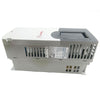
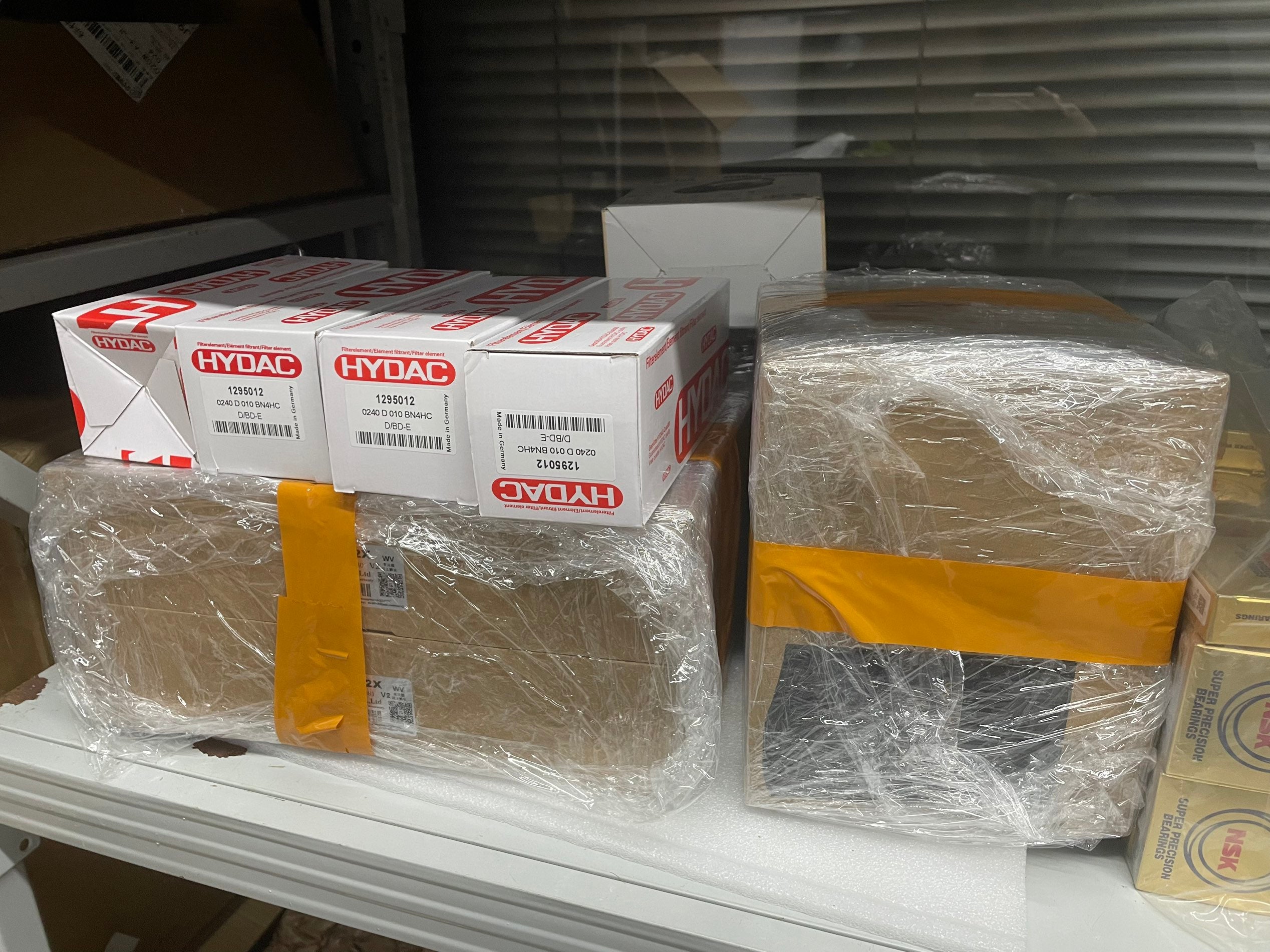
MR-J4-500B Mitsubishi AC Servo Driver Ready for Shipping
Mitsubishi MR-J4-500B AC Servo Driver: A Practical Guide for Engineers and Buyers
If you've been looking for a servo drive that handles heavy-duty CNC duty cycles without fuss, the Mitsubishi MR-J4-500B is probably already on your shortlist. It's one of the more requested models we ship — and for good reason. In this guide, we'll break down exactly what makes it stand out, share a few real-world use cases from customers who've deployed it, and help you decide whether it's the right fit for your application.
What Is the Mitsubishi MR-J4-500B?
The MR-J4-500B is a 5kW AC servo amplifier from Mitsubishi Electric's fourth-generation J4 series. The "B" suffix means it communicates over SSCNET III/H — Mitsubishi's high-speed fiber-optic servo network — making it purpose-built for motion controllers in the Q, L, iQ-R, and iQ-F PLC families.
What sets the J4 series apart from its predecessor (the MR-J3) is the jump to a 22-bit high-resolution absolute encoder, which gives you 4,194,304 pulses per revolution. In practical terms, that's the difference between positioning that's "good enough" and positioning that stays accurate after 10,000 cycles on a production line.
"We replaced a J3-series drive on our horizontal machining center with the MR-J4-500B. The improvement in axis repeatability was noticeable within the first day of running." — maintenance engineer at an automotive parts supplier in Guangzhou
Technical Specifications
|
Specification |
Details |
|
Model |
MR-J4-500B |
|
Rated Output Power |
5 kW (500W class — 5kW continuous rated) |
|
Input Voltage |
3-Phase 200–240V AC, 50/60Hz |
|
Control Method |
Fully closed-loop / semi-closed-loop |
|
Communication |
SSCNET III/H (high-speed fiber optic) |
|
Encoder Compatibility |
22-bit high-resolution absolute encoder |
|
Max Speed |
Up to 6,000 rpm (motor dependent) |
|
Positioning Accuracy |
±1 pulse (22-bit encoder) |
|
Protection Level |
IP20 |
|
Vibration Suppression |
Advanced adaptive vibration suppression |
|
Regenerative Option |
Built-in + external resistor option |
|
Compatible Motors |
HG-SR, HG-MR, HG-RR series |
|
Compatible Controller |
Mitsubishi Q/L/iQ-R/iQ-F series PLC |
|
Dimensions (W×H×D) |
55 × 170 × 165 mm (approx.) |
|
Weight |
Approx. 1.6 kg |
|
Condition |
Genuine New Original |
Note: Always confirm motor-amplifier pairing using Mitsubishi's MR Configurator2 software before installation. Mismatched combinations can trigger AL.37 or AL.16 parameter errors.
Features That Actually Matter in the Field
1. SSCNET III/H Fiber Communication
Older installations running analog ±10V or pulse-train interfaces often struggle with noise on long cable runs — especially near VFDs or welding equipment. SSCNET III/H eliminates that entirely. The fiber-optic link runs at 150 Mbps and supports synchronous operation across up to 16 axes on a single network. Commissioning time drops noticeably because there's no need for shielding or grounding tricks.
2. 22-Bit Absolute Encoder Support
With the built-in absolute encoder interface, the drive retains position data through power cycles without homing. For machines that need to restart quickly after an e-stop or power blip — packaging lines, for example — this is a real productivity benefit. Battery backup on the encoder side means the position is held even when cabinet power is off.
3. Adaptive Vibration Suppression
The MR-J4-500B includes adaptive tuning that identifies and suppresses mechanical resonance frequencies automatically. On lighter frames or long ballscrews, this can be the difference between clean motion and constant oscillation alarms. One of our customers running a gantry router noted that they disabled manual notch filters entirely after switching to J4 — the auto-tuning handled it.
4. One-Touch Tuning & MR Configurator2
Setup is straightforward. Connect via USB, launch MR Configurator2, run the auto-tuning wizard, and most machines are operational within an hour. The software also provides real-time waveform monitoring, which is genuinely useful when chasing down occasional AL.52 (overload) faults that only appear under full cutting load.
Real-World Applications: How Customers Use the MR-J4-500B
Case 1 — CNC Vertical Machining Center (VMC), Precision Parts Manufacturer
A precision components shop in Shenzhen was running three-axis VMCs on aging MR-J2S drives. Replacement parts for the J2S were becoming harder to source, and one axis was producing intermittent AL.32 (overcurrent) faults that wasted 2–3 hours of production per week chasing down the cause.
They upgraded the X and Y axes to MR-J4-500B units paired with HG-SR52 motors. After reconfiguring the parameter sets and running a short auto-tune cycle, both axes ran cleanly. The overcurrent faults disappeared — the root cause turned out to be oscillation from an under-damped resonance that the J4's adaptive suppression handled automatically. Downtime dropped from roughly 10 hours a month to near zero on those axes in the following quarter.
Case 2 — Automated Welding Positioner, Heavy Equipment Manufacturer
A manufacturer of agricultural machinery in Shandong needed to retrofit a rotary welding positioner. The existing analog servo system couldn't hold the 0.05-degree positioning tolerance required for a new weld pattern. They needed something that could sync precisely with a six-axis welding robot over a common motion network.
The solution was a single MR-J4-500B driving a 4.5kW HG-SR motor through a worm gearbox. Integrated with a Mitsubishi iQ-R controller over SSCNET III/H, the positioner now holds ±0.02 degrees repeatably across an eight-hour shift. The welding reject rate on the relevant joint dropped from 3.2% to under 0.4%.
Case 3 — High-Speed Packaging Line, Food Processing Facility
A snack food packaging plant in Fujian was running a horizontal form-fill-seal machine that required the film-drive axis to maintain tight speed synchronization with a rotary cutter. The original drive was a competitor's unit that required frequent manual gain adjustments as the film roll diameter changed during a production run.
After installing the MR-J4-500B with adaptive tuning enabled, the line ran through a full film roll change without any operator intervention on the servo parameters. Throughput on that machine increased by about 8% because the axis spent less time in fault recovery and speed correction cycles.
MR-J4 Series Model Selection Guide
Choosing the right power class matters. Here's a quick comparison of common J4-B models:
|
Model |
Power |
Interface |
Encoder |
Best For |
|
MR-J4-10B |
100W |
SSCNET III/H |
22-bit |
Small robots, pick-and-place |
|
MR-J4-100B |
1 kW |
SSCNET III/H |
22-bit |
Light machining, conveyors |
|
MR-J4-200B |
2 kW |
SSCNET III/H |
22-bit |
Mid-range CNC, assembly arms |
|
MR-J4-500B ★ |
5 kW |
SSCNET III/H |
22-bit |
Heavy CNC, welding, packaging |
|
MR-J4-700B |
7 kW |
SSCNET III/H |
22-bit |
Large machining centers |
The MR-J4-500B sits in the sweet spot for most medium-duty CNC and motion control work — enough power headroom for intermittent heavy cuts, without the cabinet space penalty of the 700B or larger units.
Installation Notes and Common Pitfalls
• Power supply: The MR-J4-500B requires 3-phase 200–240V AC. Single-phase input is not supported at this power class — a common mistake when retrofitting equipment originally designed for smaller drives.
• Regenerative resistor: At 5kW with frequent deceleration (e.g., short-stroke back-and-forth motion), the built-in regenerative capacity may be insufficient. Add an external MR-RB series resistor if AL.30 (regenerative error) appears during high-duty-cycle operation.
• Fiber cable handling: SSCNET III/H uses duplex plastic optical fiber (POF). Avoid tight bending radii under 25mm and keep connectors clean — a dirty fiber connector is the most common cause of communication errors on J4 networks.
• Parameter backup: Before any firmware update or replacement, export parameters using MR Configurator2. A full parameter backup takes under two minutes and saves significant troubleshooting time if a drive fails.
• Grounding: The drive chassis must be grounded to the cabinet earth bar with a short, low-impedance connection. Poor grounding is the leading cause of unexplained noise-related faults on SSCNET systems.
Common Alarm Codes and What They Actually Mean
AL.10 — Undervoltage
Usually a power supply issue, but also triggered by a loose CN1B connector on the SSCNET side. Check both before assuming the mains supply is the problem.
AL.16 — Encoder Error
Often caused by a damaged encoder cable or a loose connector at the motor. Check the cable routing — encoder cables should never run in the same conduit as power cables.
AL.37 — Parameter Error
Typically occurs after a firmware update or if parameters from an incompatible motor series are loaded. Re-run the motor selection in MR Configurator2 and verify the motor series matches the parameter set.
AL.52 — Overload
The axis is being asked to deliver more torque than the drive and motor combination can sustain. Either the load exceeds the drive rating, the duty cycle is too aggressive, or the gain settings are causing oscillation that adds to the thermal load. Check the load ratio in the MR Configurator2 waveform display under real cutting conditions.
Sourcing the MR-J4-500B: What to Watch For
Genuine Mitsubishi J4-series drives have a holographic serial label on the front panel and ship with a full parameter sheet in the box. If the box arrives without documentation, or the serial number can't be verified through Mitsubishi's support channel, treat it with caution.
We keep the MR-J4-500B in stock as new original units. Lead times from Mitsubishi directly can stretch 8–14 weeks depending on region and current demand — for maintenance replacements where a machine is down, that's rarely acceptable. Our stock ships same-day for orders placed before 3PM GMT+8, with DHL Express available for most destinations.
Need a different power class or a compatible HG-SR motor to go with it? Contact us directly — we can often put together a matched drive-motor package faster than sourcing separately.
Final Thoughts
The MR-J4-500B is a mature, well-supported product with a strong track record across CNC machining, robotics, and industrial automation. It's not the newest drive Mitsubishi makes — the MR-J5 series has since launched — but the J4 platform is stable, widely deployed, and extensively documented, which matters a lot when a machine goes down at 2am and you need to troubleshoot fast.
If you're retrofitting older J2 or J3 hardware, the J4-B is a practical upgrade path that doesn't require a controller change if you're already on a Mitsubishi network. If you're speccing a new build, it's worth comparing against the J5 series for projects that benefit from the newer EtherNet/IP interface — but for pure SSCNET III/H systems, the J4 remains an excellent choice.
Questions about compatibility, parameter migration, or volume pricing? Reach out through the contact details below — our engineering team is happy to help work through the specifics.
Keywords: Mitsubishi MR-J4-500B, MR-J4 servo driver, SSCNET III/H servo amplifier, 5kW servo drive, Mitsubishi J4 series, AC servo driver CNC, MRJ4500B, Mitsubishi servo amplifier 500W, industrial servo drive

-
Posted in
CNC Parts In Promotion, Technical knowledge