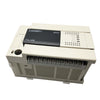
Tips for daily PLC applications

This article compiles some practical tips for daily PLC applications, hoping to help you use PLCs effectively.
1. Grounding Issues
PLC systems have strict grounding requirements. Ideally, they should have a dedicated, independent grounding system. It's also important to ensure that other devices related to the PLC are reliably grounded.
Connecting multiple circuit grounding points together can generate unexpected currents, leading to logic errors or circuit damage.
Different grounding potentials are usually caused by grounding points being physically too far apart. When devices far apart are connected by communication cables or sensors, current flows between the cable and ground throughout the circuit. Even over short distances, the load current of large equipment can cause changes in its potential relative to ground, or unpredictable currents can be generated directly through electromagnetic interactions.
Incorrectly grounded power supplies can generate devastating currents in the circuit, potentially damaging equipment.
PLC systems generally use a single-point grounding method. To improve common-mode interference immunity, shielded floating ground technology can be used for analog signals. This means the signal cable's shield is grounded at a single point, the signal loop floats, and the insulation resistance to ground should be no less than 50MΩ.

2.Interference Handling
Industrial environments are harsh, with numerous high- and low-frequency interferences. These interferences are typically introduced into the PLC through cables connecting to field equipment.
In addition to grounding measures, the following anti-interference measures should be taken during cable design, selection, and installation:
(1) Analog signals are small signals and are easily affected by external interference; therefore, double-shielded cables should be used.
(2) High-speed pulse signals (such as pulse sensors, counting codes, etc.) should use shielded cables to prevent external interference and interference from high-speed pulse signals to low-level signals.
(3) Communication cables between PLCs have high frequencies; generally, cables provided by the manufacturer should be used. In cases where requirements are not high, shielded twisted-pair cables can be used.
(4) Analog signal lines and DC signal lines should not be routed in the same cable tray as AC signal lines.
(5) Shielded cables leading into and out of the control cabinet must be grounded and should be directly connected to the equipment without passing through terminals.
(6) AC signals, DC signals, and analog signals should not share a single cable; power cables should be laid separately from signal cables.
(7) During on-site maintenance, methods to resolve interference include: using shielded cables for the affected lines and re-laying them; and adding anti-interference filtering code to the program.

3.Eliminating Inter-line Capacitance to Prevent Malfunctions
Capacitance exists between the conductors of a cable. A qualified cable can limit this capacitance within a certain range.
Even with a qualified cable, when the cable length exceeds a certain limit, the inter-line capacitance will exceed the required value. When this cable is used for PLC input, the inter-line capacitance may cause PLC malfunctions, resulting in many inexplicable phenomena.
These phenomena mainly manifest as: correct wiring, but no PLC input; inputs that should be present are absent, while those that shouldn't be present are present, i.e., PLC inputs interfere with each other. To solve this problem, the following should be done:
(1) Use cables with twisted cores;
(2) Minimize the length of the cable used;
(3) Separate cables for interfering inputs;
(4) Use shielded cables.

4.Selection of Output Modules
Output modules are categorized into transistor, triac, and contact types:
(1) Transistor type: The switching speed is the fastest (generally 0.2ms), but the load capacity is the smallest, approximately 0.2~0.3A, 24VDC. It is suitable for fast switching and signal communication equipment, generally connected to frequency converters, DC devices, etc. Attention should be paid to the impact of transistor leakage current on the load.
(2) Triac type: Advantages include no contacts and AC load characteristics, but a small load capacity.
(3) Relay output: Features AC/DC load characteristics and a large load capacity. Relay contact type outputs are generally preferred in conventional control applications. The disadvantage is a slow switching speed, generally around 10ms, making it unsuitable for high-frequency switching applications.
-
Posted in
Technical knowledge