Local I/O vs Remote I/O: Which Is Better for Your System?
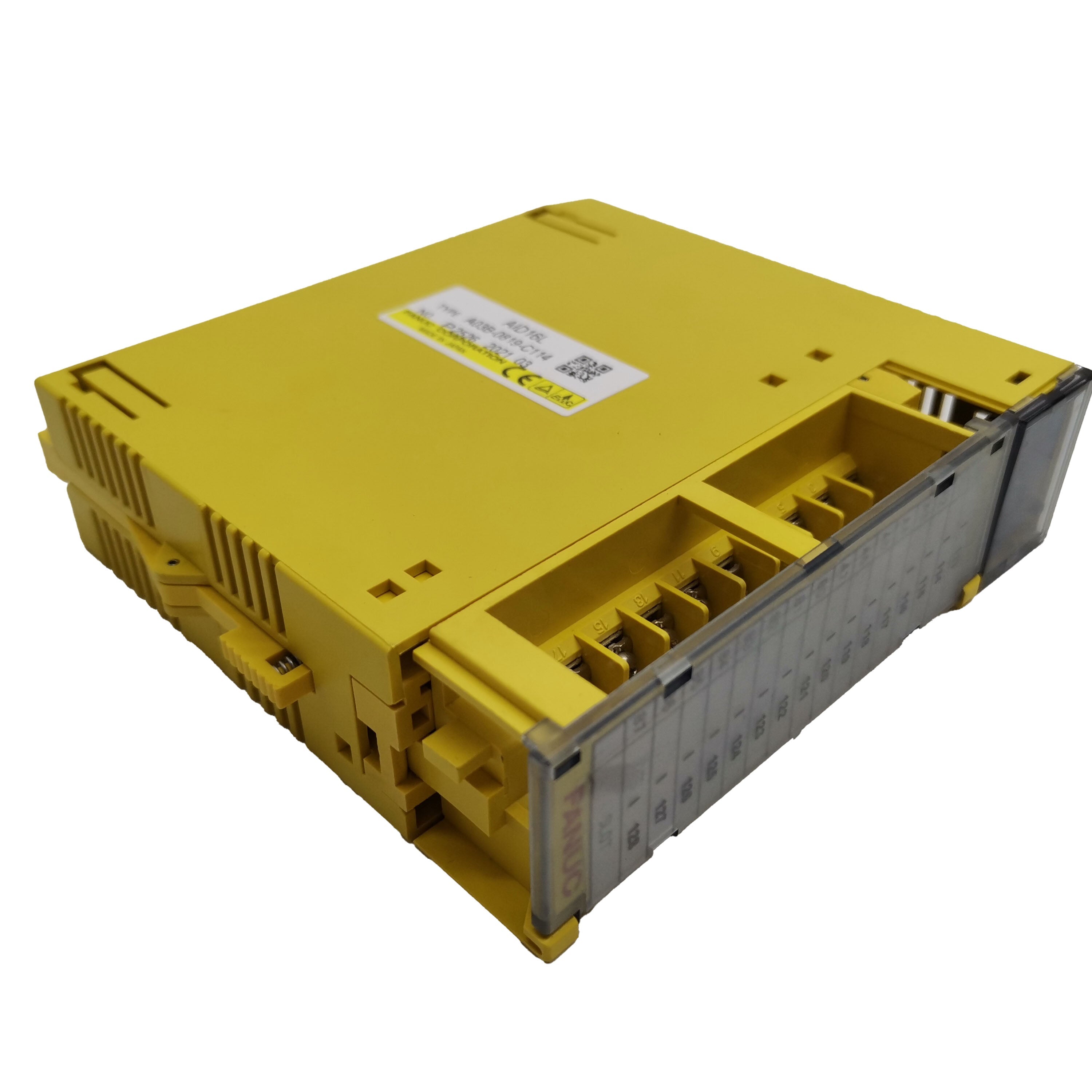
Local I/O vs Remote I/O: Which Is Better for Your System?
Walk into any panel-build shop and you'll hear this argument. Half the engineers swear by the local backplane — deterministic, one cabinet, easy to debug. The other half say that's outdated thinking — modern Ethernet remote I/O has closed the latency gap, and nobody runs 200 metres of multi-core cable when a $400 field node does the same job. Both camps are partly right. The honest answer depends on the machine, the wiring runs, and what you plan to do with the system five years from now.
1. What's the Actual Difference?
Local I/O modules sit on the same chassis as the PLC. The processor talks to them over the backplane bus (1–10 Mbps) with no network overhead — just direct memory-mapped access to the I/O image.
Remote I/O sits elsewhere — another cabinet, a junction box on the machine, or a node next to a sensor cluster. Communication runs over an industrial network: PROFINET, EtherNet/IP, EtherCAT, Modbus TCP, or older fieldbuses like PROFIBUS and DeviceNet.
The terminology varies by brand — they all named it differently before standards emerged:
| Brand | Local I/O | Remote / Distributed I/O |
|---|---|---|
| Siemens | Central I/O | Distributed I/O (ET 200) |
| Allen-Bradley | Local I/O | RIO (legacy), FLEX, POINT |
| Schneider | Local I/O | OTB, TM3, X80 |
| Mitsubishi | Local modules | CC-Link, MELSECNET |
| Beckhoff | — | All distributed (EL EtherCAT) |
2. Architecture Compared
Local I/O: PLC plus I/O cards in one main cabinet. All field wires run back to that single point. Simple and concentrated, but lots of cable.
Remote I/O: PLC in the main cabinet. Smaller I/O nodes placed near the field devices. One network cable links them all. Short field wiring, distributed footprint.
Both end at the same field devices — the difference is where the I/O modules sit.
3. Does Remote I/O Really Hurt Response Time?
Local I/O updates in microseconds over the backplane — limited only by PLC scan time (typically 1–10 ms). Modern Ethernet remote I/O is closer than people think: PROFINET IRT and EtherCAT routinely hit sub-millisecond cycles. PROFINET RT and EtherNet/IP run 1–4 ms.
For discrete control — conveyors, packaging, material handling — that's well inside the response window. Where local still wins: closed-loop motion sync, fast safety reactions, high-speed registration.
| Architecture | Update Cycle | Determinism | Best For |
|---|---|---|---|
| Local I/O | µs (bounded by scan) | Deterministic | High-speed motion, safety I/O |
| EtherCAT | 0.1 – 1 ms | High | Multi-axis motion, fast process |
| PROFINET IRT | 0.25 – 1 ms | High | Synchronized motion |
| PROFINET RT / EtherNet/IP | 1 – 10 ms | Soft real-time | Packaging, conveyors |
| Modbus TCP | 10 – 100 ms | Non-deterministic | Slow I/O, HMI data |
| Wireless I/O | 50 – 500 ms | Non-deterministic | Condition monitoring |
💡 Don't chase microseconds you'll never use. On a typical packaging line, you won't see any difference between local and remote Ethernet I/O at the application level.
4. Wiring, Panel Space, and Total Cost
It depends on cable runs. A 50-point I/O cluster 30 metres from the panel means 50 individual conductor pairs back to the cabinet — cable, conduit, terminations at both ends, and hours of skilled labour.
With remote I/O: one network cable plus 24 V power to a node near those 50 points. Field wiring drops from 30 m per signal to 1–2 m. Cable cost falls. Panel shrinks. Termination labour collapses.
Break-even rule: When per-point cable runs exceed ~10 m and you have at least 8–16 points clustered, remote I/O usually wins on installed cost. Below that, local I/O is cheaper.
⚡ Often overlooked: Arc flash and electrical safety. A dense main cabinet concentrates risk. Distributed I/O spreads it. Increasingly cited by safety teams in chemical, pharma, and oil & gas plants.
5. Scalability and Future Expansion
Remote I/O wins this round, decisively. PLC chassis have fixed slot counts — once full, you need an expansion rack or a bigger PLC. Adding a remote node is just a network address assignment, a config download, and one more box on the wall.
Matters most for plants that grow incrementally. Wireless I/O extends this further — drop a node next to old equipment to collect vibration or temperature data without pulling any new wire.
6. Reliability and Troubleshooting
Cuts both ways. Local I/O is concentrated in one cabinet — easy to find faults, but a single cabinet failure (power supply, fan, water) takes out everything.
Remote I/O distributes the failure surface. A failed node only affects its own I/O. Modern systems give channel-level diagnostics over the network from the engineering desk.
The trade-off: network problems become a new failure category — switches, cable damage, EMC, IP conflicts. Most are designed around with ring topologies (PROFINET MRP, EtherNet/IP DLR), but that adds cost and config complexity.
| Factor | Local I/O | Remote I/O |
|---|---|---|
| Latency / determinism | Best | Very good |
| Wiring cost (long runs) | High | Low |
| Wiring cost (short runs) | Low | Higher fixed cost |
| Panel space | Large | Small |
| Future expansion | Slot-limited | Add nodes freely |
| Failure isolation | Single point | Distributed |
| Diagnostics | Immediate, basic | Channel-level |
| Network failures | N/A | New category |
| Commissioning effort | Simpler | More config |
| Arc flash risk | Concentrated | Distributed |
7. Network Protocols That Matter
Most modern systems are Ethernet-based. The choice usually follows the PLC brand:
PROFINET — Siemens native, most European brands. RT 1–4 ms, IRT <1 ms. Strong ecosystem with MRP redundancy. Switches must support PROFINET prioritization.
EtherNet/IP — Allen-Bradley, US-centric brands. 1–10 ms typical. Standard Ethernet hardware works. Less deterministic than PROFINET IRT.
EtherCAT — Beckhoff native, Omron, Yaskawa. 100 µs – 1 ms. Fastest mainstream protocol; ideal for motion. Master is the bottleneck.
Modbus TCP — Schneider, brand-agnostic. 10–100 ms. Simple and open, runs on any IP network. No determinism — for slow I/O and HMI data.
Legacy installations may still run PROFIBUS DP, DeviceNet, or CC-Link. Fine for retrofit, but new installations have been almost entirely Ethernet-based since the mid-2010s.
8. A 6-Step Decision Method
Step 1 — How many I/O points? Under 32, single location → local. Over 100, especially spread out → remote starts to make sense.
Step 2 — How far are the field devices? Under 10 m → local wins. 10–50 m clustered → remote nodes near clusters. Over 50 m → remote is usually the only reasonable choice.
Step 3 — Response time requirement? Sub-millisecond deterministic → local or EtherCAT/PROFINET IRT. 1–10 ms → either works. Tens of ms → any remote including Modbus TCP.
Step 4 — Will the system grow? Yes → remote, for easy expansion. No, fixed scope → local sized for the build.
Step 5 — What's the I/O environment? Harsh, hot, washdown → IP65/IP67 remote nodes. Standard panel → any IP20 module works either way.
Step 6 — Networking expertise on the team? Comfortable with industrial Ethernet → remote is straightforward. Limited → local removes a whole category of problems.
Bottom Line
The "local vs remote" debate isn't really a debate anymore — most non-trivial machines use both. Local backplane carries high-speed and safety-critical I/O. Remote nodes handle distributed sensor and actuator I/O around the machine. The real question is "which I/O belongs where" — not "which one wins."
Small standalone machines under one panel → local. Anything sprawling, multi-cabinet, or expected to expand → plan remote from the start. Retrofitting later always costs more.
If you're sizing I/O for a specific project, send us the I/O point count, distances, and response time requirements. We'll suggest a layout that fits without over- or under-engineering it.
FAQ
Q: Can I mix local and remote I/O on the same PLC? Yes. Most industrial PLCs support both at once. Local for fast or safety-critical signals, remote for the rest.
Q: Does remote I/O work without a managed switch? For Modbus TCP, yes. For PROFINET or EtherNet/IP with motion, you need managed switches that support traffic prioritization.
Q: What's the maximum distance for remote I/O? On copper Ethernet, 100 m per segment. With fibre, several kilometres. PROFIBUS and DeviceNet have shorter limits depending on baud rate.
Q: Is wireless remote I/O reliable for production control? For control loops, no — latency and packet loss are too unpredictable. For data collection and condition monitoring, yes.
Q: Which is cheaper for a small machine under 32 I/O points? Local I/O. Fixed costs of remote nodes, switches, and configuration outweigh wiring savings on small builds.
-
Posted in
Technical knowledge