PLC vs PAC: What's the Difference and Which Do You Need?
PLC vs PAC: What's the Difference and Which Do You Need?
1. Definitions and Where Each Came From
PLC (Programmable Logic Controller) was formally established in 1987 under the IEC 61131-1 standard: a digital electronic system, purpose-built for industrial environments, using programmable memory to execute logic, sequencing, timing, counting, and arithmetic operations for controlling machines or production processes.
PAC (Programmable Automation Controller) was proposed in 2001 by ARC Advisory Group (Craig Resnick) to address PLC limitations in complex system integration. The defining feature: a centralised control engine covering multiple control disciplines plus the data integration needs of modern manufacturing.
2. Design Philosophy
The two products were designed around different mental models.
PLC philosophy = specialisation. Built to replace relays. Ladder logic mirrors the thinking of an electrical engineer. The PLC is a rugged, reliable, intentionally closed "island" serving determinism and reliability above everything else.
PAC philosophy = integration. Built for multi-domain collaboration. Merges logic, process, motion, data acquisition, and analysis on one platform. The target is to break the traditional separation between field layer, control layer, and information layer — and the design reflects system-engineer and IT-engineer thinking rather than just electrical engineering.
3. Hardware: Where the Real Differences Sit
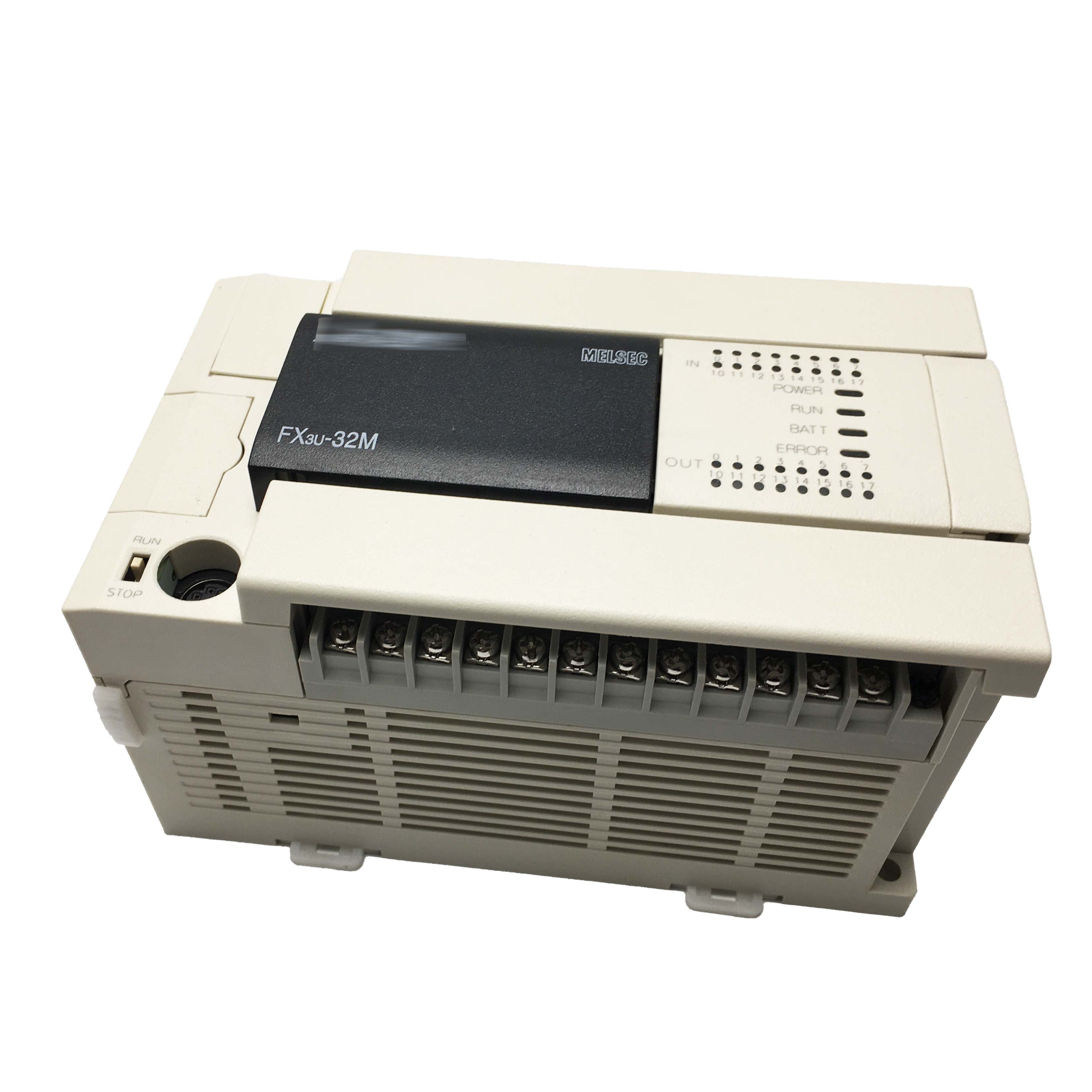
PLC hardware characteristics:
- Dedicated processors (ASIC) or microcontrollers (MCU), compact design, heavily optimised for boolean operations and sequential control — fast execution, high determinism
- Even modern high-end PLCs use single-core or heterogeneous multi-core architecture (one core dedicated to high-speed I/O scan, another to communication) so the control core isn't interrupted
- Small fixed memory in KB to MB, used mainly for user program and I/O state
- Storage in flash, limited data logging, external memory card needed for history
- Traditional interfaces: RS-232/485 serial, industrial Ethernet for HMI/SCADA
PAC hardware characteristics:
- High-performance commercial off-the-shelf (COTS) general-purpose processors — Intel Atom, Core i series, or high-performance ARM. Essentially an "industrially hardened computer"
- Symmetric multi-core architecture, parallel processing, with separate tasks (motion, vision, HMI, database) running on dedicated cores in isolation
- Large memory: hundreds of MB to several GB of RAM. Can hold large programs, cache real-time waveform data, run embedded databases
- Open distributed I/O: traditional fieldbus plus native Ethernet-based I/O (EtherCAT, PROFINET IRT) at 100 Mbit/s to Gigabit speeds, with low latency. Intelligent remote stations can preprocess raw data (filtering, calibration) before upload
- Built-in or expandable SSD for historical data, recipes, production logs, even video and images
- Rich integration: multiple high-speed Ethernet ports (one for real-time industrial network, one for IT), often with Wi-Fi, 4G, or 5G
4. Programming Languages
PLC strictly follows IEC 61131-3 — primarily graphical languages: ladder diagram (LD) and function block diagram (FBD), with IL (instruction list) and ST (structured text) as text options.
PAC is compatible with IEC 61131-3 but also supports high-level languages — C, C++, Python, C# — for complex algorithms. The architecture combines PLC reliability with IPC-class performance via open processor platforms (x86/ARM).
5. Software Architecture and Operating Systems
This is where the two diverge most clearly.
PLC runs a proprietary RTOS — a small, highly optimised embedded real-time OS developed by the PLC vendor (or in some cases VxWorks). No extras. The single goal is cyclic execution of the user program with maximum determinism and reliability. Data lives as registers and variable tables, transient by design. Advanced data processing — historical trends, statistical analysis — happens at the SCADA layer above. IT integration is an afterthought needing middleware and extra conversion.
PAC typically runs a COTS RTOS plus an application environment. The most common architecture today is a real-time Linux kernel with the PREEMPT_RT patch handling critical task scheduling deterministically, with a standard Linux user space on top. That user space can run databases (SQLite, InfluxDB), web servers, Python interpreters, Java VMs — a full software ecosystem.
The PAC effectively becomes an edge computing node. It can host a real-time database locally, cache production data, run stream processing for quality determination or equipment health analysis, and push processed data straight to the cloud or MES/ERP via OPC UA or MQTT. Data integration is native — no separate gateway required. In this respect a modern PAC resembles a DCS more than a traditional PLC.
6. Communication Protocols
PLC typically supports traditional industrial protocols: vendor-proprietary protocols, Modbus TCP, CIP, IEC 104, DNP 3.0.
PAC has the full TCP/IP stack at the hardware level. It runs industrial Ethernet (EtherCAT, PROFINET) alongside IT standards: OPC UA (unified architecture), MQTT, HTTP/HTTPS, SQL — direct connection to upper information systems without intermediaries.
7. Comparison at a Glance
| Dimension | PLC | PAC |
|---|---|---|
| Core philosophy | Specialisation — reliability, determinism, logic | Fusion — integration, information, control |
| Hardware core | Dedicated ASIC/MCU, single or heterogeneous core | COTS x86/ARM, symmetric multi-core |
| Memory | KB to MB, limited | MB to GB, large |
| Operating system | Proprietary RTOS | RT-Linux, VxWorks (COTS RTOS) |
| Programming languages | IEC 61131-3 (LD, FBD, IL) | IEC 61131-3 + C++/Python/C# |
| Communication | Traditional fieldbus (PROFIBUS, etc.) | Industrial Ethernet (EtherCAT) + IT protocols (OPC UA, MQTT) |
| Data processing | Temporary variables, relies on SCADA | Built-in database, edge computing |
| System role | Device controller | Production-line information hub |
8. Application Scenarios
| Scenario type | PLC use case | PAC use case |
|---|---|---|
| Discrete control | Automotive assembly line e-stop (µs response), packaging machine sequencing | Smart line coordinating multiple robots |
| Process control | Single-variable temperature control | Pharma reactor multi-variable MPC control |
| Data-intensive tasks | Basic equipment status monitoring | Plant-level energy optimisation, quality traceability matrix |
| Future expansion | Fixed-function small systems | Smart factory needing MES/ERP or AI integration |
PLC fits ordinary industrial control, particularly discrete: hard real-time requirements with simple-to-moderate logic. PAC fits applications needing advanced algorithms for continuous control — closer to DCS territory — where complex computation and system integration matter as much as the control loop itself.
9. Which One Do You Actually Need?
The honest answer first: the gap between a high-end modern PLC and a PAC has narrowed enough that the choice often comes down to vendor preference, existing code base, and team expertise — not raw capability.
Pick a PLC when:
- The application is dominated by discrete and standard analog I/O
- Hard real-time determinism for sequential control is non-negotiable
- The maintenance team is fluent in IEC 61131-3 (LD, FBD, ST)
- You're extending or replacing existing PLC code
- Decades-long reliability matters more than peak compute performance
Pick a PAC when:
- You need motion, vision, and process control unified on one platform
- Edge computing or local databases reduce dependence on a SCADA layer
- High-level languages (C++, Python) are needed for algorithms PLCs handle poorly
- Direct integration with MES/ERP/cloud via OPC UA or MQTT is a design requirement
- The architecture has to scale across plant areas with mixed automation needs
Many large installations end up hybrid: PLC for fast deterministic logic, PAC (or PC) for data processing, vision, and MES integration, talking over industrial Ethernet. That's often the most pragmatic architecture.
FAQ
Q: Is a PAC just a renamed high-end PLC? Partly. Capability has converged, but the architecture is different: PAC uses COTS processors and a real-time Linux/COTS RTOS; modern PLC keeps a proprietary RTOS on dedicated industrial hardware.
Q: Does a PAC offer hard real-time control? Yes, when running on a hardened real-time OS — typically a Linux kernel with PREEMPT_RT, or VxWorks. Standard Windows desktop OSs don't qualify.
Q: Can a PAC be programmed in ladder logic? Yes. PAC supports IEC 61131-3 (including ladder), but adds C, C++, Python, and C# for tasks where graphical languages are inefficient.
Q: Why not just use an industrial PC with control software? Three recurring problems: stability of general-purpose OS, reliability of non-industrial hardware, and lack of a unified development platform across control disciplines. PLC and PAC are both engineered around these.
Q: Which is better for connecting to MES, ERP, or cloud systems? PAC. Native OPC UA and MQTT support, built-in databases, and standard TCP/IP stack make integration straightforward. PLC typically needs a gateway or middleware layer to do the same.
-
Posted in
Technical knowledge