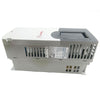
Allen-Bradley 1746-NO4V Analog Output Module
Allen-Bradley 1746-NO4V: The Analog Output Module That Keeps Industrial Plants Running
Category: Industrial Automation | Allen-Bradley SLC 500 | PLC Components
There's a particular kind of trust that builds up around a piece of industrial hardware that simply never lets you down. Not excitement — trust. The sort that develops quietly over years of midnight shifts, temperature swings, and production deadlines that don't move for anyone.
The Allen-Bradley 1746-NO4V /AB has earned exactly that kind of reputation. It's a 4-channel analog voltage output module built for the SLC 500 platform, and in terms of raw longevity and installed base, few I/O modules in the Rockwell Automation catalog come close to matching it.
This article covers what the module actually does, what the key specs mean in a real plant environment, and what genuine field applications look like when it's doing its job.
What This Module Actually Does
Every PLC lives in a digital world. It reads inputs, runs logic, and writes outputs — all in binary. But the equipment on a plant floor doesn't work that way. A variable speed drive expects a voltage reference. A proportional valve moves in response to a continuous analog signal. A thyristor power controller needs something it can throttle, not just switch on and off.
The 1746-NO4V bridges that gap. It takes the SLC 500 processor's digital output values and converts them into four analog voltage signals, each independently controlled, each capable of ranging from −10V DC to +10V DC. That conversion is handled by a 14-bit R-2R ladder digital-to-analog converter, delivering a resolution of 1.221 mV per step.
Four channels. Sub-millisecond updates. Stable, clean analog output. That's the job — and it does it well.
What the Key Specs Actually Mean in the Field
Datasheets hand you numbers without context. Here's what the figures that matter most for the 1746-NO4V actually mean when you're selecting, installing, or troubleshooting it.
Output Accuracy: ±0.208% of Full Scale at 25°C
Across a ±10V DC range, that works out to roughly ±20.8 mV of absolute error at room temperature. For the majority of industrial analog control tasks — speed references, valve positioning, process setpoints — this sits comfortably within the tolerance of whatever field device is receiving the signal.
Where the floor matters more is in precision process control: high-resolution position references, tight chemical dosing loops, or instrumentation-grade applications. In those cases, the 14-bit resolution and ±0.208% error floor should both be evaluated against the process requirement before specifying the module.
Temperature Drift: ±54 ppm/°C
This one tends to get skipped during design and resurfaces during commissioning. A 25°C rise in panel temperature from the calibration baseline adds approximately ±13.5 mV of additional drift across the full ±10V range. In a well-ventilated cabinet held below 40°C, that's negligible. In a poorly cooled enclosure on a hot summer plant floor, it can push the total system error past acceptable limits.
The module is rated for operation from 0°C to 60°C. It will function at the upper boundary, but engineers working near it should account for drift in their system accuracy budget — not assume worst-case accuracy only applies at room temperature.
Backplane Current: 55 mA @ 5V DC / 145 mA @ 24V DC
In a fully loaded SLC 500 chassis, every module's power draw stacks against the supply's rated capacity. The 1746-NO4V's 5V draw is modest. The 24V draw at 145 mA is worth accounting for in a high-density build.
If the chassis is running tight on 24V headroom, the module's external power input solves it cleanly. Setting the SW1 switch to the external position and connecting a separate regulated 24V DC source removes the 24V backplane draw entirely — only 55 mA at 5V remains on the bus.
Isolation: 500V AC for 60 Seconds
The isolation barrier between the field wiring terminals and the SLC 500 backplane is rated at 500V AC withstand for 60 seconds. In practical terms, this protects the processor from voltage transients, ground loops, and common-mode noise that enter from the field side — which matters most in panels where long cable runs share conduit with motor starters, VFDs, or other high-current switching equipment.
Technical specifications for 1746-NO4V
| Manufacturer | Allen Bradley |
|---|---|
| Category | PLCs |
| Product Line | SLC 500 |
| Part Number | 1746-NO4V |
| GTIN | 10662073735929 |
| Weight | 3.00 lbs (1.36 kg) |
| Module Type | Analog Output Module |
| Backplane Current (5 Volts) | 55 milliamps |
| Outputs | Four (4) |
| Backplane Current (24 Volts) | 145 milliamps |
| Output Voltage | -10 to +10VDC |
| Full Scale Output | 10 VDC |
| Conversion Method | R-2R Ladder |
| Voltage Output Coding | -32,768 to +32,764 |
| Update Time | 512 microseconds |
| Backplane Current | (5 Volts) 55 milliamps; (24 Volts DC) 145 milliamps |
| Resolution | 14 bits |
| Step Response | 2.5 milliseconds |
| Indicators | LEDs |
| UPC | 10662073735929 |
| Ambient Operating Temperature | 0 to 60 degrees Celsius |
Source: Rockwell Automation Publication 1746-UM005 — SLC 500 4-Channel Analog I/O Modules User Manual
Three Applications Where This Module Has a Proven Track Record
Application 1 — Variable Speed Drive Control on a Bottling Line
A mid-sized beverage manufacturer running a multi-lane filling and capping operation used SLC 5/04 processors to manage fill valve timing and conveyor speeds. The downstream drives — Allen-Bradley PowerFlex 40 series — accepted ±10V DC analog speed references, making the 1746-NO4V a direct and straightforward fit.
One module per chassis slot covered four drive zones simultaneously. The parallel 512 µs update ensured all zones received their new speed references within the same processor scan — eliminating the timing offset that had caused intermittent speed mismatch alarms with the older, sequential-update module it replaced.
When the module eventually failed after years of continuous service, the maintenance crew had it swapped in under ten minutes. The removable terminal block stayed connected to the panel wiring the entire time. The new module powered up, the processor re-established communication, and the line was back in production before the shift ended.
Application 2 — Barrel Temperature Control in Plastics Extrusion
A plastics processor running multiple extruder lines needed stable temperature regulation across barrel heating zones. Each zone used a thyristor power controller that accepted a 0 to +10V DC reference to modulate heater output between 0% and 100%.
The control strategy was clean: RSLogix 500 PID function blocks calculated the required output for each zone, and the 1746-NO4V delivered it. With the module's full scale mapped so that 0V equalled 0% heater power and +10V equalled 100%, the PID loop had straightforward, proportional control authority across the full heater range.
The ±0.208% accuracy was sufficient to hold barrel temperatures within the ±2°C tolerance the product quality specification required. The electrical cabinets were air-conditioned, keeping ambient temperature steady around 28–32°C — comfortably within the module's low-drift operating range.
One detail worth flagging from this installation: the original build used a 1746-P2 power supply as the 24V DC source for the analog module. Unstable outputs were eventually traced back to this — the P2's 24V DC regulation falls outside the 1746-NO4V's requirements. Switching to a compatible regulated supply resolved the problem immediately. This incompatibility is documented in Rockwell Automation Publication 1746-UM005, but it's a step that gets missed often enough to be worth stating plainly.
Application 3 — Proportional Valve Control at a Municipal Pump Station
A water authority upgrading a pump station used SLC 500 hardware to control six large butterfly valves on main supply lines. Each valve actuator accepted a ±10V DC positioning signal — negative voltage driving the valve toward closed, positive toward open.
With four channels per module, two 1746-NO4Vs in adjacent chassis slots covered all six actuators with two channels held in reserve for future expansion. The project engineer specifically noted the 500V AC isolation as a deciding factor during equipment selection. Large pump motor starters in the same facility generated significant electrical noise, and the isolation margin provided confidence that switching transients from the field side would not propagate back into the SLC 500 processor.
That station has been in continuous operation for over a decade, requiring only routine scheduled maintenance with no module failures.
Sourcing the 1746-NO4V Today
The SLC 500 platform has reached end-of-life for new product investment, but Rockwell Automation continues to support the installed base, and the 1746-NO4V remains available through several channels.
New old stock (NOS) through authorized Rockwell distributors is increasingly scarce but still findable for facilities on active support contracts.
Certified surplus is the most practical option for most buyers in 2025. Reputable surplus suppliers test and inspect modules before sale and typically back them with a one to two year warranty. For maintenance spares in a stable SLC 500 system, this is the standard approach.
Repair and exchange programs are offered by several industrial automation service companies. For a module that has failed due to a single component or board-level fault, repair cost is often a fraction of replacement — worth exploring before committing to a full purchase.
When sourcing surplus, confirm the Series A revision (the most common in the field), verify the removable terminal block is included, and request a functional test report. Sourcing the RTB separately is possible but adds unnecessary time and complexity to the procurement.
How It Compares to Other SLC 500 Analog Output Options
| Module | Output Type | Channels | Resolution | Best For |
|---|---|---|---|---|
| 1746-NO4V | Voltage (±10V DC) | 4 | 14-bit | Drives, valve actuators, speed references |
| 1746-NO4I | Current (4–20 mA) | 4 | 14-bit | Process control, long cable runs |
| 1746-NIO4V | Combo: 2 in / 2 out voltage | 2+2 | 14-bit | Mixed I/O, space-constrained builds |
| 1746-NIO4I | Combo: 2 in / 2 out current | 2+2 | 14-bit | Mixed process I/O |
The decision between voltage and current output usually comes down to two things: what the field device accepts, and how long the cable run is. Current signals (4–20 mA) resist degradation over long cable distances because the signal isn't affected by conductor resistance. Voltage signals are the right choice for shorter runs and are preferred by many drive and actuator manufacturers as their native reference input.
When Does It Make Sense to Migrate Away?
Every few years, someone in the organization asks whether it's time to replace the SLC 500 system entirely. The honest answer depends heavily on context.
Migrating to the CompactLogix platform — Rockwell's recommended path — involves real costs: engineering time, new hardware, reprogramming, validation, and production downtime. For a stable system where the process hasn't changed and spare parts are available, the cost-benefit math often favors maintaining what's working.
Where migration makes clear sense: when the processor itself is failing and sourcing replacements is becoming unreliable, when a broader controls upgrade is already planned, or when the application requires capabilities the SLC 500 platform genuinely cannot provide — EtherNet/IP native communication, advanced motion control, or modern diagnostics.
For the analog output function specifically, the 1769-OF4 on the CompactLogix 1769 platform is the closest functional successor. It offers 16-bit resolution versus the 1746-NO4V's 14-bit, per-channel output range selection, and native EtherNet/IP connectivity. For everyone else running a stable system: stock a spare 1746-NO4V, keep the documentation current, and keep running.

-
Posted in
CNC Parts In Promotion