What Exactly Is a Servo Motor?
Servo Motors Explained: What Every Buyer Needs to Know Before Placing an Order
Last updated: March 2026
If you've landed on this page, chances are you're staring down a spec sheet, a vendor quote, or an engineer's request that mentions "servo motor" — and you need to figure out what you're actually buying. Maybe you've also seen "stepper motor" thrown around as an alternative, and you're wondering which one makes more sense for your project budget.
I get it. I've watched procurement teams spend weeks going back and forth between vendors because nobody took the time to lay out the basics in plain language. So let's fix that.
This guide breaks down everything you need to understand about servo motors — how they work, where they shine, and how they stack up against stepper motors. No engineering degree required.
So What Exactly Is a Servo Motor?
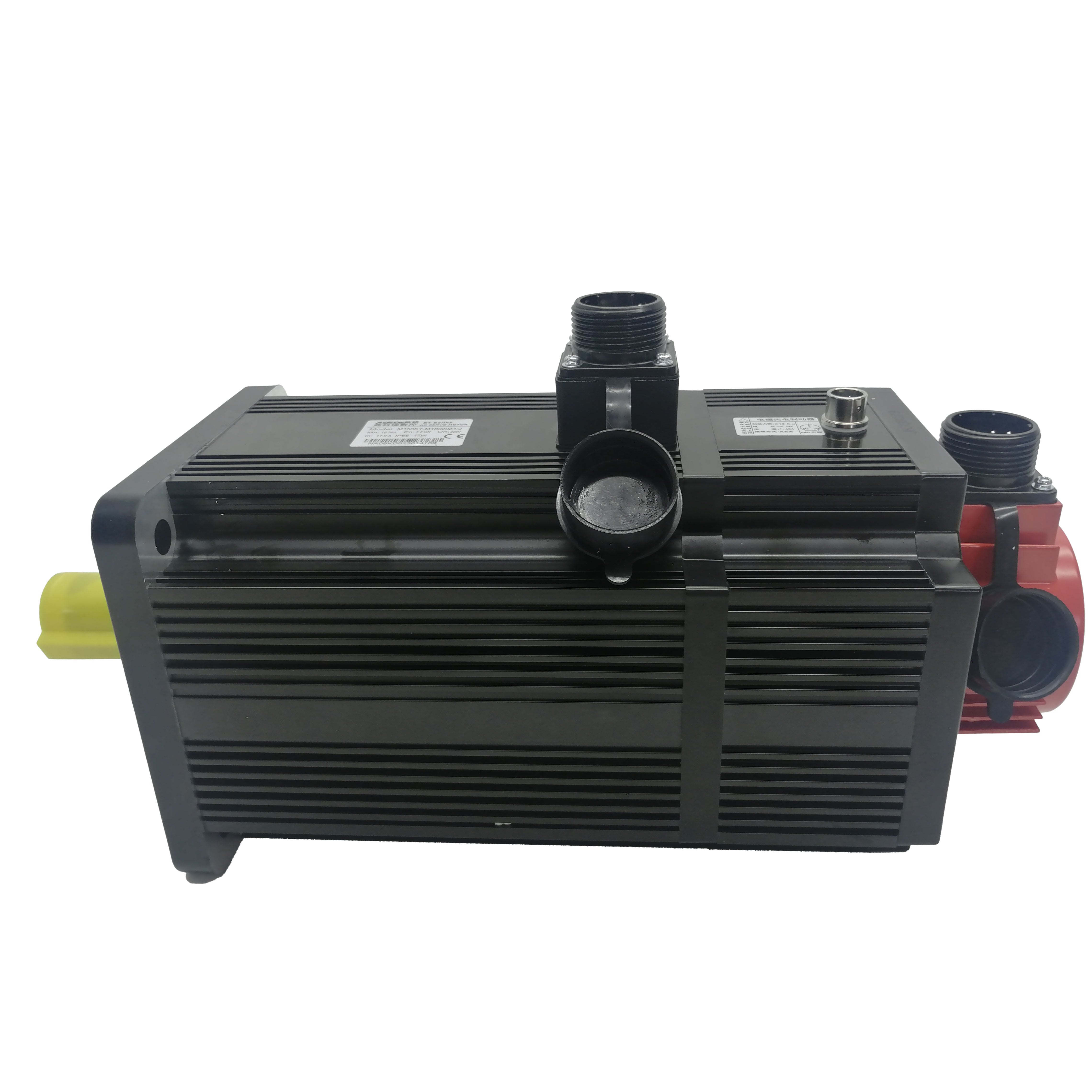
At its core, a servo motor is an electric motor designed to give you extremely precise control over three things: position, speed, and torque.
Think of it this way. A regular motor spins when you give it power, and it stops when you cut it. That's fine for running a fan or a pump. But what if you need a robotic arm to pick up an egg without cracking it? Or a CNC machine to carve a part down to a tolerance of a few microns? That's where servo motors come in.
What makes a servo motor different from a standard motor is the feedback loop. There's an encoder or resolver mounted on the motor shaft that constantly reads where the shaft is, how fast it's turning, and how much force it's applying. That information feeds back to a controller, which makes real-time adjustments — hundreds or even thousands of times per second — to keep the motor doing exactly what you told it to do.
This closed-loop design is the whole reason servo motors exist. Without it, you just have a regular motor guessing its way through a job.
The Building Blocks of a Servo System
When your engineering team asks you to source a "servo motor," what they really mean is a servo system. It has three main parts:
The motor itself. Most industrial servos today are AC permanent magnet synchronous motors (PMSM). They use rare-earth magnets — typically neodymium — in the rotor. You'll also find DC servos in older equipment and some niche applications, but AC servos dominate the market. According to industry research, AC units held roughly 65% of the global servo motor market in 2025.
The drive (or amplifier). This is the power electronics box that takes commands from your controller and converts them into the precise current waveforms the motor needs. Modern servo drives communicate over industrial Ethernet protocols like EtherCAT, PROFINET, or EtherNet/IP. Think of the drive as the motor's translator — it takes digital instructions and turns them into physical motion.
The feedback device. This is your encoder or resolver. Absolute encoders remember their position even when you kill the power. Incremental encoders are cheaper but need a homing routine every time you restart. For most packaging, automotive, and semiconductor applications, absolute encoders have become the default.
Why the Market Is Booming
Here's some context that matters for budget conversations. The global servo motors and drives market was valued at around $16–17 billion in 2025, and analysts expect it to climb past $23 billion by 2031 — growing at roughly 6% annually. Asia-Pacific leads with nearly 46% of global revenue, driven largely by electronics production in China, manufacturing expansion in India, and Japan's dominance in precision motion technology.
What's pushing demand? A few big trends. Factories are upgrading to Industry 4.0 networked systems. Electric vehicle battery and motor assembly lines need extreme precision. Energy-efficiency regulations are forcing manufacturers to retire old induction motors in favor of IE4-class servo packages. And collaborative robots — cobots — are showing up everywhere from warehouses to surgical suites.
For procurement teams, this means lead times can fluctuate, especially for high-end units with specific encoder configurations or rare-earth magnet grades. Plan accordingly.
Servo Motor vs. Stepper Motor: Cutting Through the Confusion
This is probably the question that brought you here. Your engineer says servo, your budget says stepper, and now you need to figure out who's right.
Let's be honest: both motors can handle precise positioning tasks. The difference comes down to how they do it, and what trade-offs you're willing to accept.
How Stepper Motors Work (The Short Version)
A stepper motor moves in fixed angular increments — steps. A typical stepper has 200 steps per revolution, giving you 1.8 degrees of motion per step. Send it 200 electrical pulses, and the shaft makes one full rotation.
The key thing to know: most stepper motors run in open loop. There's no encoder watching the shaft. The controller sends pulses and assumes the motor followed the commands. This works fine under predictable loads. But if the motor encounters an unexpected force — say a jam or a heavier-than-expected workpiece — it can "miss steps." And since there's no feedback, nobody knows it happened until the part comes out wrong.
Head-to-Head Comparison
Here's where the practical differences start to matter for project planning:
Speed and torque behavior. Stepper motors deliver strong torque at low speeds, but that torque drops off sharply as RPM increases. Servo motors maintain consistent torque across a much wider speed range and can deliver brief peaks of extra torque when they need to accelerate fast or push through a tough spot. If your application involves high speeds or quick direction changes, servo is almost always the right call.
Accuracy. This one surprises people. At the step level, a stepper motor can actually be slightly more accurate than a servo — around ±0.05 degrees without microstepping, compared to a servo's ±0.02 degrees or better. But — and this is a big "but" — that stepper accuracy only holds when the motor isn't missing steps. Under dynamic loads, the servo's closed-loop feedback makes it far more reliable. For applications where cumulative error is unacceptable, such as aerospace machining or semiconductor lithography, servos are non-negotiable.
Efficiency and heat. Stepper motors draw full current whether they're working hard or sitting still. That means they run hot, especially during idle periods. Servo motors only draw the current they need at any given moment. Over a long production shift, that efficiency difference translates into real energy savings — and less heat to manage inside your machine enclosure.
Holding position. Here's where steppers have a genuine advantage. A stepper motor can hold its position at zero speed with full torque, no extra hardware needed. Servo motors can hold position too, but they need continuous power and active feedback to do it. Some applications — like a vertical axis that needs to lock in place when the machine stops — actually favor steppers for this reason.
Cost. On a per-unit basis, stepper motors and their drives are significantly cheaper than servo systems, especially under 500 watts. A decent stepper setup might run you 30–50% of what an equivalent servo system costs. But before you let the price tag make the decision, read the next section.
The Hidden Cost Trap
I've seen this play out on multiple projects: the team picks stepper motors to save money upfront, only to spend more later dealing with the consequences.
A packaging line that chose steppers to save budget ended up with a 3% scrap rate from missed steps. At production volumes of 100,000 units per month, that's 3,000 wasted packages — plus the labor to inspect, repackage, and deal with customer complaints. Swapping to servos brought that scrap rate under 0.5%.
Another common headache: stepper motors resonate at certain speeds, causing vibration and noise. On a machine that runs 16 hours a day, that vibration wears out bearings and mechanical components faster, driving up maintenance costs. Servo motors don't have this issue because the closed-loop control actively damps oscillation.
The point isn't that steppers are bad — they're excellent for the right application. The point is that the cheapest motor isn't always the cheapest solution.
When to Choose a Servo Motor
If any of the following describe your project, servo motors are likely the right fit:
High-speed applications. Anything over 1,000 RPM where you still need positional accuracy. Think conveyor sortation, flying shear cutters, or high-speed labeling machines.
Variable or unpredictable loads. If the force on the motor changes during operation — like a robot arm lifting different-weight objects — the servo's closed-loop system handles that automatically.
Multi-axis coordination. Articulated robots, CNC mills, and pick-and-place machines often need multiple motors moving in perfect sync. Servo drives with high-speed communication buses like EtherCAT can synchronize multiple axes down to microsecond-level timing.
Long duty cycles. If your machine runs two or three shifts per day, the energy efficiency of servos pays for itself. Less wasted heat also means simpler thermal management and longer component life.
Safety-critical applications. Semiconductor handling, medical devices, aerospace components — anywhere that a missed step or lost position could mean a ruined $10,000 wafer or a safety incident. The feedback loop isn't optional here; it's a requirement.
When a Stepper Motor Makes More Sense
Don't overlook steppers. For the right applications, they're not just cheaper — they're actually a better technical fit:
Low-speed positioning with predictable loads. 3D printers, small CNC routers, lab automation equipment, and camera positioning systems. If the load is consistent and the speed stays moderate, a stepper does the job reliably without the complexity of a closed-loop system.
Budget-constrained prototyping. Building a proof-of-concept or a short-run machine? Stepper motors are simpler to integrate, require less tuning, and the lower cost lets you iterate faster.
Applications requiring holding torque. Vertical axes, clamping mechanisms, or anything that needs to lock in place without power draw benefit from the stepper's natural holding ability.
Compact installations. Because steppers don't need an encoder, they're physically shorter. In tight machine envelopes, that can be a real advantage.
Real-World Case Studies: Making the Right Call
Case 1: Automotive Assembly Line (Servo)
A Tier 1 automotive supplier needed to upgrade a door panel assembly station. The old pneumatic system was slow, inconsistent, and burned through compressed air. The engineering team spec'd servo-driven electric actuators for the pressing and fastening stations.
The result: cycle time dropped from 12 seconds to 8 seconds per station. More importantly, the servo's torque monitoring caught fastening errors in real time — something the pneumatic system could never do. Defect rates on the line fell by 40%, and the energy cost per station dropped by roughly 60% since electric servos don't need a compressor running 24/7.
For the procurement team, the servo system cost about 2.5x more than the pneumatic hardware it replaced. But the payback period was under 14 months, driven by lower scrap, lower energy costs, and reduced maintenance.
Case 2: Food Packaging Line (Stepper-to-Servo Upgrade)
A snack food manufacturer was running stepper motors on their carton-forming machines. The steppers worked fine at the original production speed of 80 cartons per minute. But when marketing demanded the line run at 120 cartons per minute, the steppers couldn't keep up — torque fell off at the higher speed, and the machines started jamming.
Rather than redesigning the whole machine, the team swapped in servo motors with the same mounting dimensions (NEMA-frame compatible). The servos handled the increased speed without breaking a sweat, and the closed-loop control actually improved carton squareness — which had been a nagging quality issue even at lower speeds.
Total cost for the upgrade: about $4,500 per machine (motor, drive, and cabling). The line went from producing 80 cartons per minute to a stable 125 cartons per minute. At the product's margin, each machine earned back the investment in less than three weeks.
Case 3: Laboratory Liquid Handling (Stepper)
A biotech company needed to automate pipetting for high-throughput screening. The motion profile was simple: move the pipette head to precise XY positions, lower it, aspirate, lift, move to the next well. Speeds were modest — under 200 mm/s — and loads were negligible.
Servo motors would have worked, but they would have been overkill. The team went with closed-loop stepper motors (steppers with encoders added) at about 40% of the servo system cost. The encoders addressed the missed-step concern without the expense of a full servo drive. The system has been running three shifts for over two years with zero positional errors.
The takeaway: the "right" motor isn't always the most expensive one. It's the one that matches your application's actual demands.
What to Ask Your Vendor (A Procurement Checklist)
When you're evaluating servo motor quotes, here are the questions that separate a smooth project from a headache:
What's the continuous torque at the application's operating speed? Don't just look at peak torque numbers. Your motor needs to deliver consistent torque at the speed your machine actually runs — not just in a lab test.
What encoder type is included? Absolute or incremental? Single-turn or multi-turn? This affects whether the machine needs to "home" every time it powers up — which matters for uptime in 24/7 operations.
What communication protocol does the drive support? Make sure it matches your PLC or motion controller. EtherCAT and PROFINET are the two most common in new installations. Swapping protocols after purchase can mean buying a different drive entirely.
What's the lead time, and is it affected by rare-earth magnet supply? This has become a real issue. China controls about 90% of global rare-earth magnet processing, and export controls have caused price swings and delivery delays. Ask your vendor about supply chain risk mitigation — do they have alternative sourcing or buffer stock?
Is the motor IP-rated for your environment? A food-grade washdown environment (IP67) requires a very different motor than a clean semiconductor fab. Getting this wrong means either premature failure or unnecessary cost.
What's the total cost of ownership? Ask for energy consumption data, expected maintenance intervals, and warranty terms. A motor that costs 30% more upfront but lasts twice as long and uses 20% less power can save tens of thousands over a machine's 10-year lifecycle.
Common Mistakes I've Seen Buyers Make
After years of watching servo motor procurement go sideways, here are the pitfalls that keep showing up:
Oversizing the motor "just to be safe." An oversized servo motor doesn't just cost more — it responds slower because the drive has to manage a larger rotor inertia. And you're paying for capacity you'll never use. Work with your engineering team to right-size based on the actual torque-speed curve, not gut feeling.
Ignoring the drive. The motor gets all the attention, but the drive is where the intelligence lives. A great motor with a mediocre drive will underperform a good motor with a well-tuned drive. Always evaluate them as a system.
Mixing vendors between motor and drive. Some servo motors and drives are designed as matched pairs — the manufacturer tunes the drive's control algorithms specifically for that motor's electrical characteristics. Mixing brands can work, but it often means longer commissioning times and suboptimal performance. If your engineering team wants to mix, make sure they have a solid reason.
Not planning for obsolescence. Servo product families have lifecycles of 7–15 years. If you're building a machine that needs spare parts for 20 years, ask about the vendor's end-of-life policy and backward compatibility track record.
The Bottom Line
Servo motors aren't magic, and stepper motors aren't junk. They're tools — and like any tool, the right choice depends on the job.
If your application demands high speed, variable loads, multi-axis coordination, or safety-critical precision, servo motors earn their premium every time. If you're working with predictable loads at moderate speeds and the budget is tight, a well-chosen stepper motor can deliver years of reliable service.
The best purchasing decisions I've seen happen when procurement teams and engineers sit down together early in the design process. The engineer understands the technical requirements; you understand the budget, lead times, and total cost picture. That combination is how you end up with the right motor on the right machine — delivered on time and within budget.
And if all else fails, remember the one rule that never lets me down: buy the motor the application needs, not the motor the budget wants. The scrap pile is full of "cost-saving" decisions.
Have questions about specifying servo or stepper motors for your next project? Drop a comment below or reach out — I'm always happy to talk motion control.
-
Posted in
CNC Service Tech